When restoration professionals discuss willow material, the first question is often about species selection. That is an important starting point, but it is only part of the picture. Just as important is the format in which that willow is grown and supplied.
For ecologists, reclamation specialists, and restoration practitioners, material format has a direct influence on installation efficiency, establishment success, and long-term field performance. The right format can help a project move more smoothly from design to installation to final closure.
This is especially true in riparian restoration and bioengineering projects, where plant material is expected to do more than simply occupy vegetative space. In these applications, willows and balsam poplar are often selected because they can help stabilize banks, reinforce slopes, establish woody cover, and contribute to long-term ecological recovery. Their ability to propagate rapidly from cuttings makes them uniquely useful in living restoration systems where both structural function and quick vegetation establishment matter.
At EcoLogic Horticulture, we work with clients who need regionally appropriate willow material for restoration, reclamation, and erosion control projects. Some require rapid access to available inventory sourced from our local mother beds. Others need contract-grown production aligned with a specific eco-region species. Selecting the right willow format or mix of formats for the project is one of the most important early decisions.
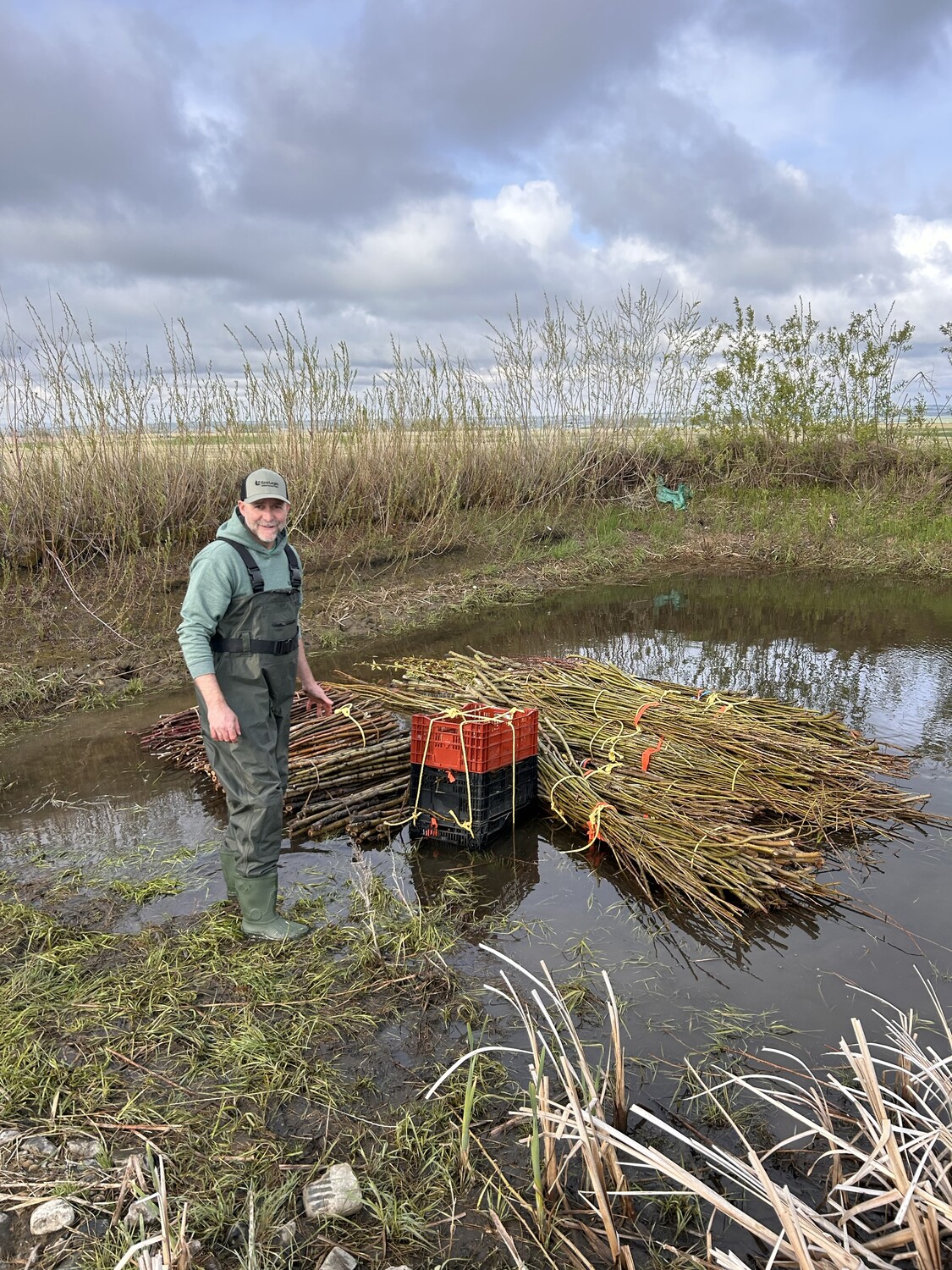
Traditional live stakes remain one of the most proven and widely used willow formats in restoration work, and for good reason. They are simple, adaptable, and highly effective when matched to the right site conditions.
A live stake is a dormant cutting installed directly into the soil, where it roots and establishes in response to available moisture and seasonal conditions. Because there is no root ball to manage, live stakes are efficient to transport, easy to handle in the field, and practical for large-scale restoration and bioengineering projects. They are commonly used for direct live staking, brush layering, and brush mattresses, where straightforward installation and broad coverage are often priorities.
The strength of the live stake lies in its flexibility. When installed by hand, stakes can be cut as needed to suit field conditions, helping crews maintain the preferred ratio of roughly 80 percent below ground and 20 percent above ground. That flexibility matters on variable sites, particularly where bank shape, soil depth, or moisture conditions shift across the planting area.
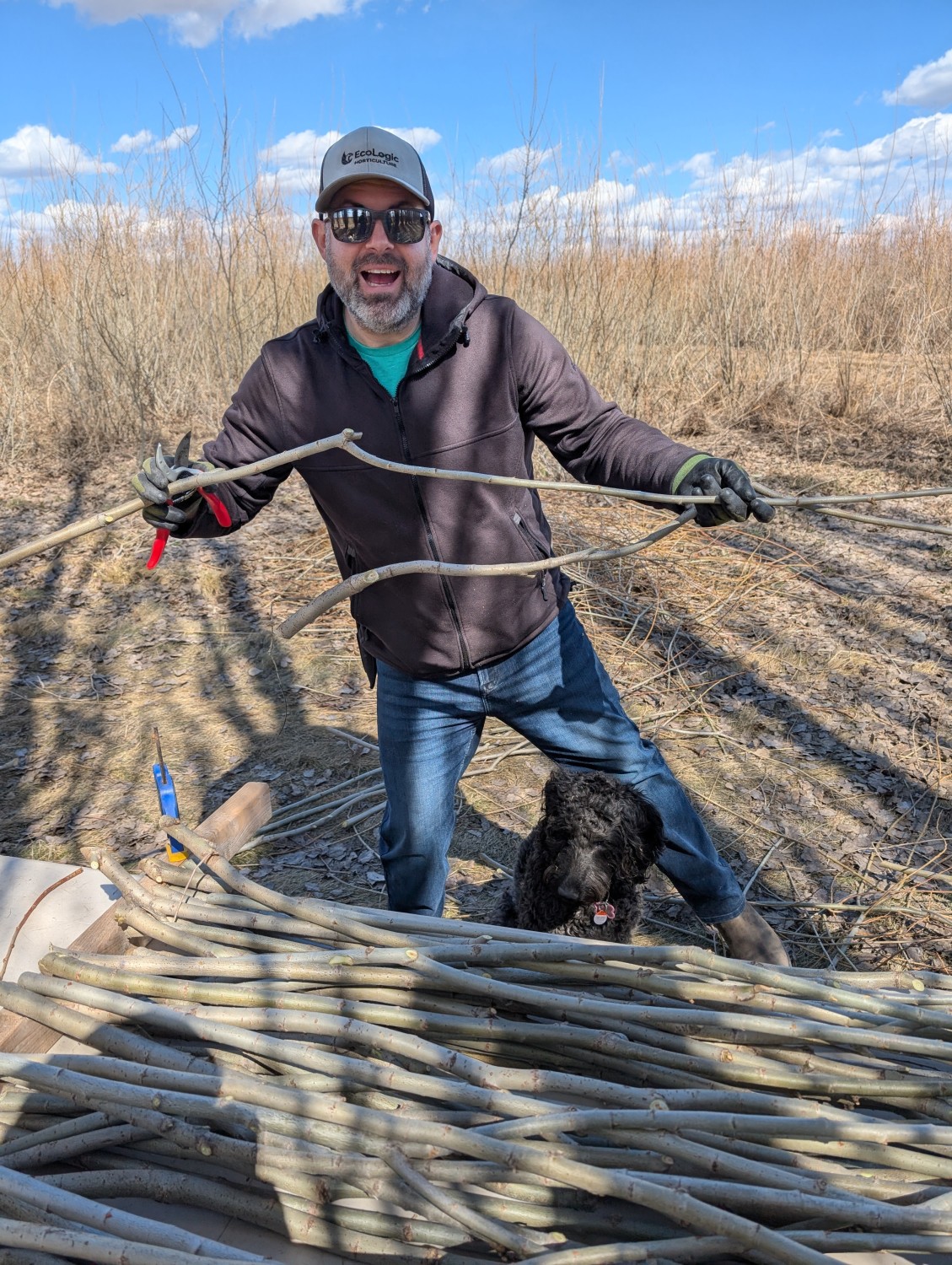
Their success, however, is closely tied to water. On irrigated sites, live stakes can achieve very strong establishment rates. On non-irrigated sites, the outcome depends much more heavily on how deeply the stake is installed and whether it can access dependable subsurface moisture or the natural water table. A deeply installed live stake can often outperform shallower plant material in these situations because it is better positioned to connect with the site’s natural moisture cycle.
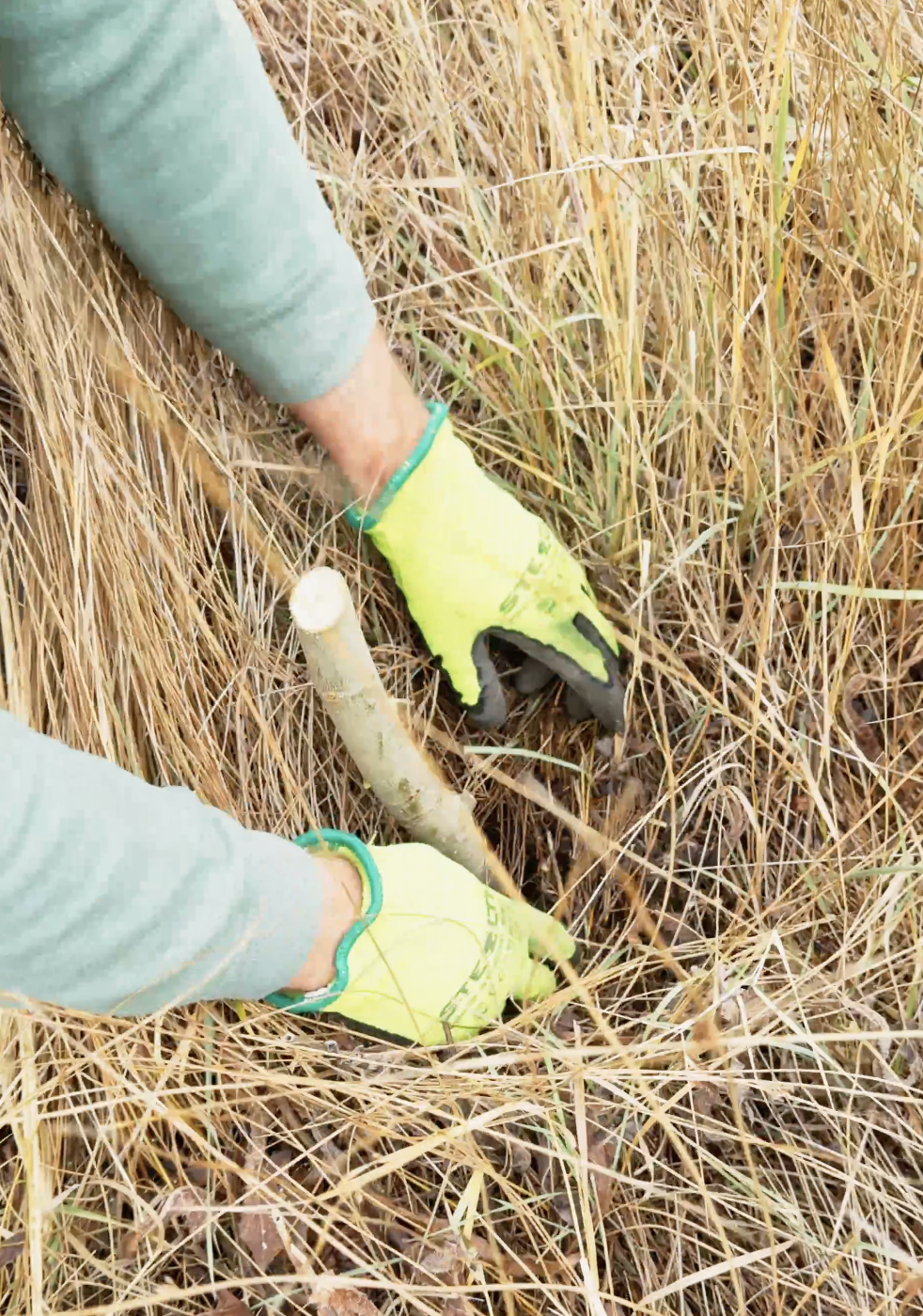
From an installation perspective, live stakes also minimize disturbance. If post holes are used, the hole only needs to be approximately the width of the stake itself. There is no root ball to accommodate, which can reduce excavation and improve planting efficiency.
For projects where depth, flexibility, and planting efficiency are key, traditional live stakes continue to be one of the most practical tools available.
Rooted willow plants bring a different set of advantages to restoration work. Rather than depending entirely on the site to initiate rooting after installation, they arrive with an established root system already in place. That gives them a valuable head start and can translate into stronger establishment percentages, faster early growth, and a more immediate vegetative presence on site.
This is especially useful on projects where early performance matters. Rooted plants can begin expanding into surrounding soil more quickly than unrooted cuttings, which can help accelerate soil reinforcement on disturbed or eroding sites. They also provide instant vegetation at installation, which can be important both functionally and visually
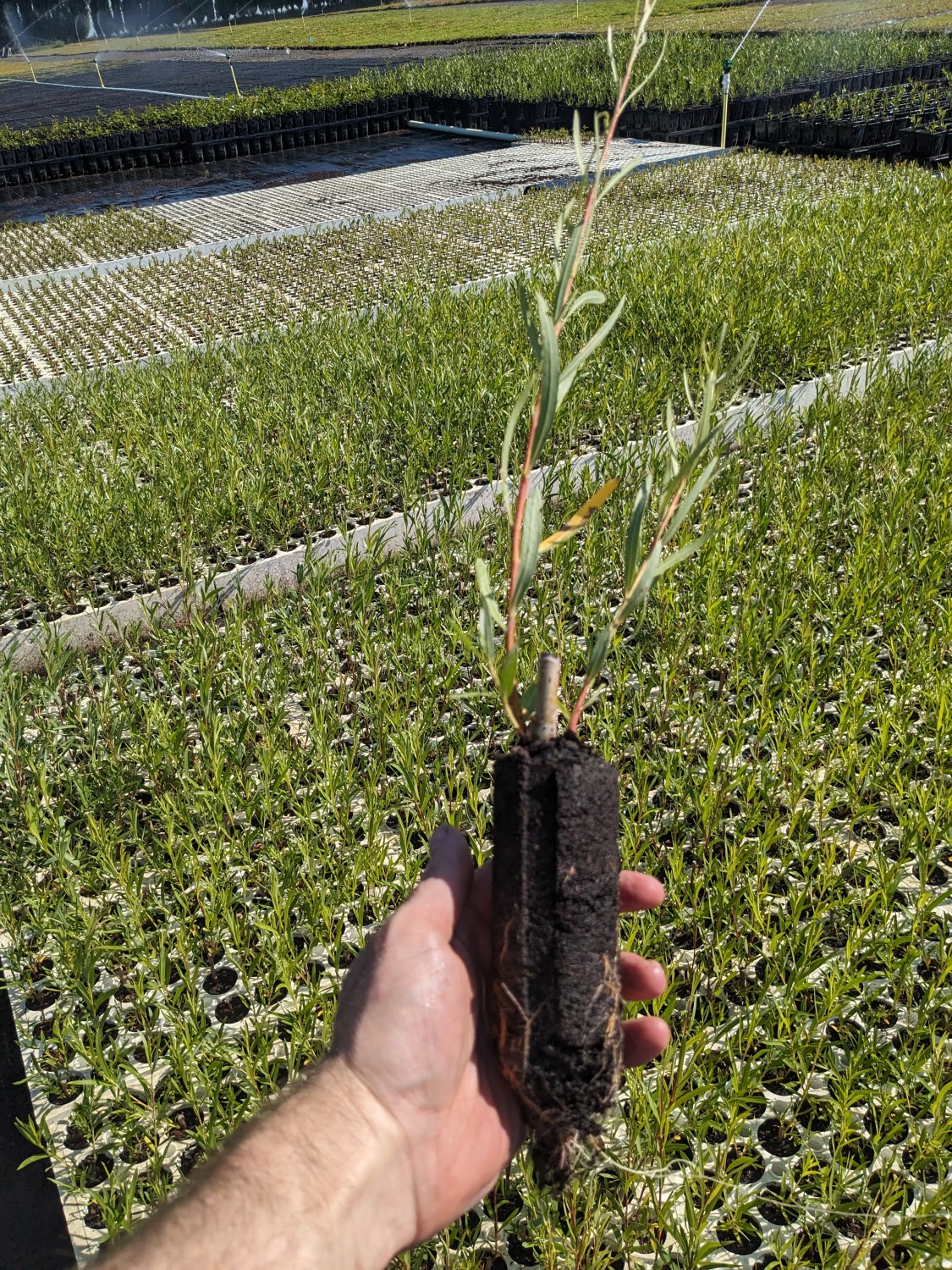
At EcoLogic, our rooted willow plants are grown as plugs and in specialized 3.14 L AirPrune pots. This is an important part of how we approach plant quality. Standard smooth-walled containers can allow roots to circle and become root bound over time, which can affect how the plant transitions into surrounding soil after installation. AirPrune pots help develop a healthier root structure by naturally directing root growth in a way that encourages branching rather than circling. The result is a plant that is better prepared to establish after planting and better positioned for strong field performance.
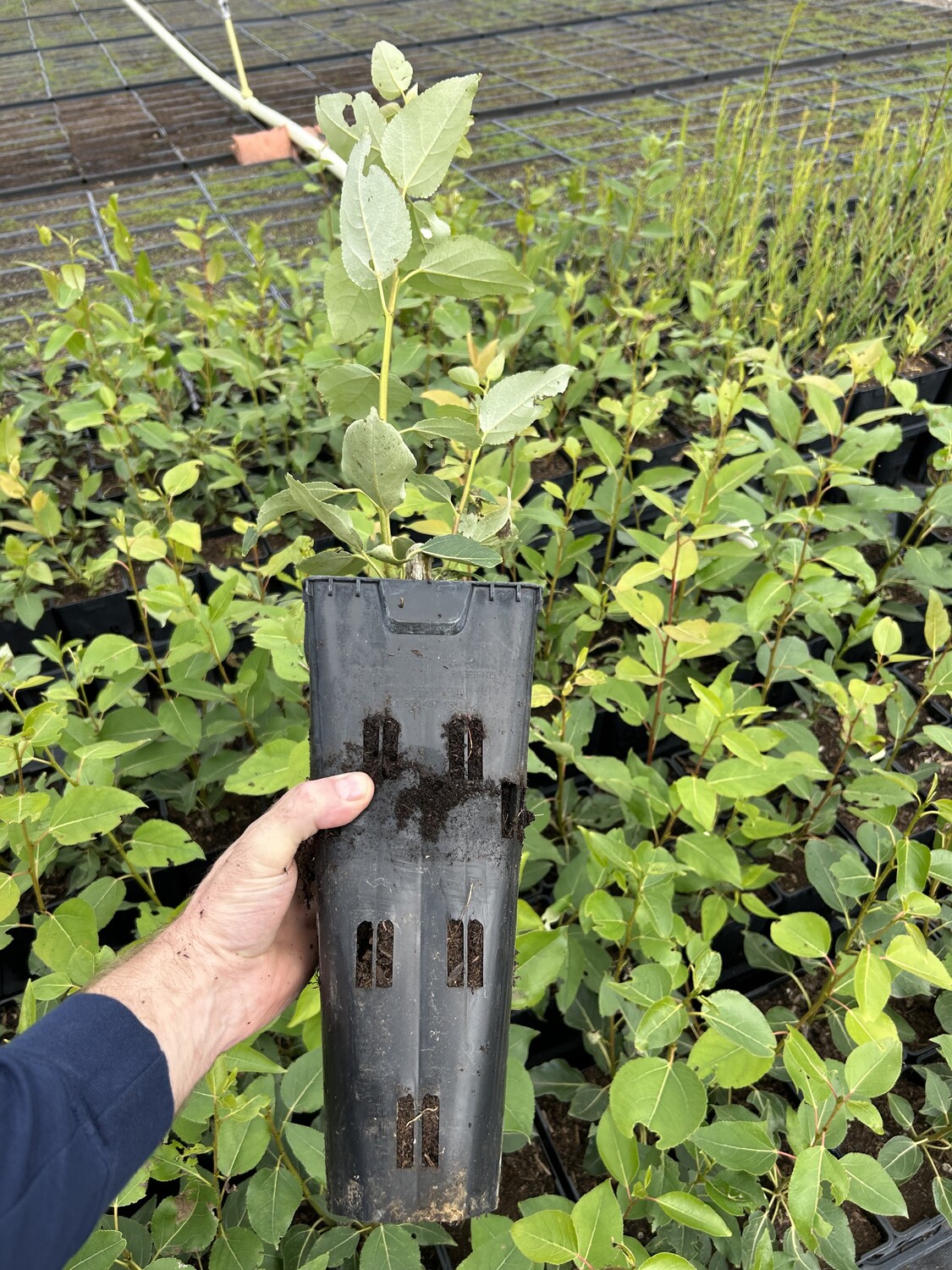
That production detail matters because the value of a rooted willow plant is not simply that it is already green and growing. Its that it arrives with a more developed internal structure and active growth capacity that can support quicker transition into the site when planted at the right time of year.
The main trade off with rooted willow plants is depth. Because they are generally planted more shallowly than traditional live stakes, they do not always reach deeper groundwater as readily as a stake installed further into the soil profile. On sites where deep moisture access is critical, that limitation needs to be considered carefully.
Even so, rooted willow plants are often the preferred choice where stronger establishment confidence, quicker early growth, and immediate above-ground vegetation are priorities. They can be particularly well suited to sites where timing, moisture, and project expectations all favour a faster visible response.
Tall Rooted Stakes, or TRS, offer a hybrid approach that combines features of both traditional live stakes and rooted willow plants. They provide the longer, stake-like form valued in many restoration designs while also bringing the establishment benefits of a rooted product.
In the right application, that combination can be extremely effective. A Tall Rooted Stake can provide immediate vegetation, faster root development, and a planting form that supports bioengineering and riparian restoration work where a longer stem profile is beneficial.
TRS are grown at our Nursery in easy-to-transport root training pots designed to prevent root wrap and promote better root development. This helps ensure that the root system is structurally prepared for establishment after installation while also making the material easier to handle and transport on active projects. Preventing root wrap is important because it supports healthier root expansion after planting rather than forcing the plant to overcome container-shaped root patterns.
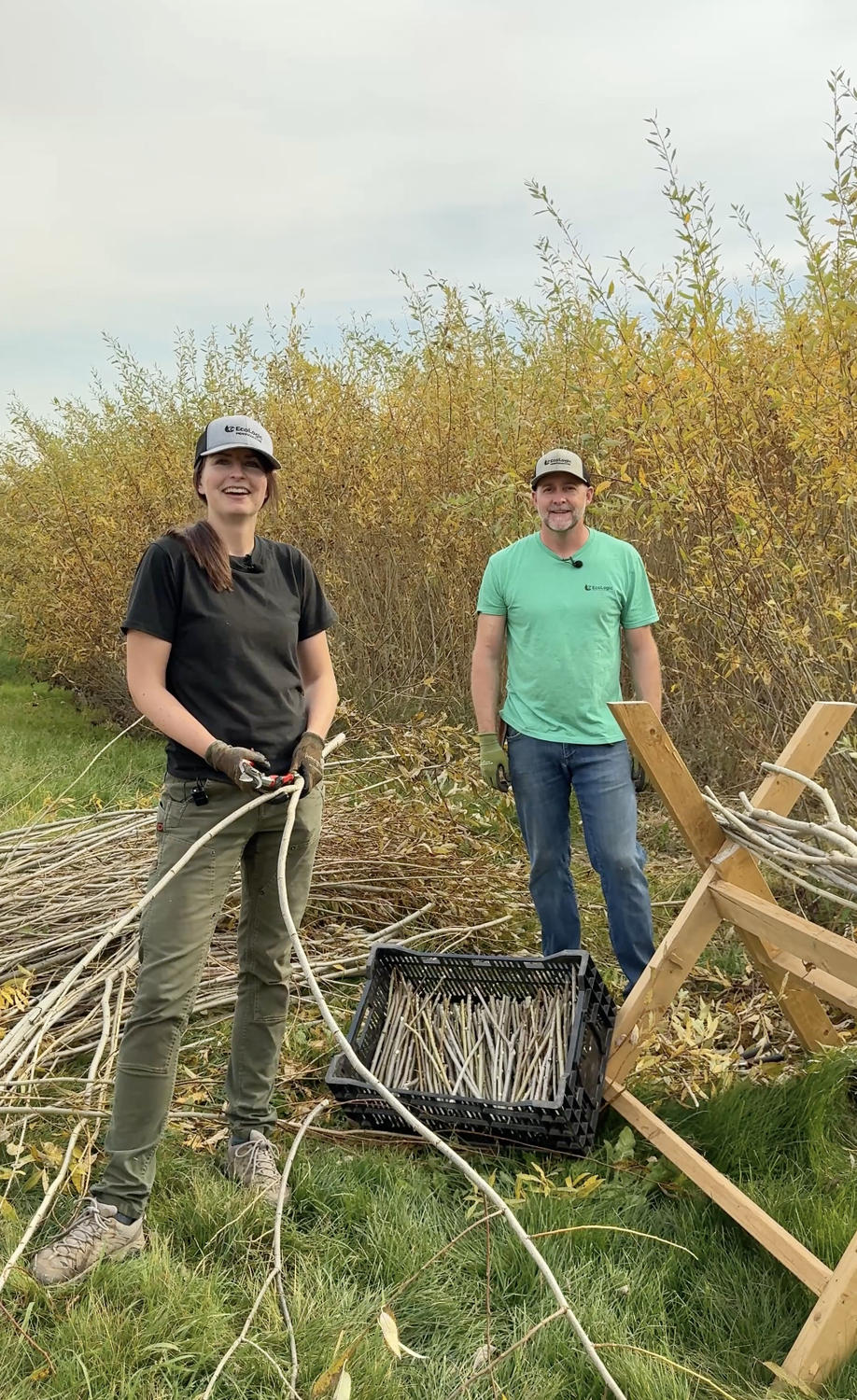
Tall Rooted Stakes are particularly well suited to designs such as brush layers on newly constructed berms or slopes, where most of the stem can be inserted below grade. In these settings, they can provide the best of both worlds: quicker visible establishment above ground and strong functional rooting below ground.
Like any specialized format, though, TRS perform best when matched carefully to the design. They are most successful where approximately 80 percent of the stem can be placed below ground and only 20 percent remains exposed. That ratio supports both moisture access and successful overwintering. If too much of the stem is left exposed, the material can be more vulnerable to desiccation and winter stress.
This is one reason TRS are not always ideal for post-hole-based designs. Because they include a small root ball, the planting hole must be wider than what is required for a traditional live stake. If the hole cannot also be made deep enough, too much of the stem may remain above grade, reducing the advantages of the format.
TRS are also less adaptable than traditional live stakes when shortening is required at installation. A live stake can often be clipped in the field with minimal consequence. A Tall Rooted Stake is meant to be installed largely as grown, and cutting it back can reduce the benefits the format is intended to provide.
When installation methods and site conditions align, TRS can be an outstanding option. They are not a replacement for every staking approach, but in the right design they offer a very effective balance between early establishment and stake-style functionality.
In restoration work, quality is shaped long before the material reaches the site. Container choice, root development, handling efficiency, and production standards all influence how willow material performs after planting.
At EcoLogic, we invest in production systems that support both field performance and operational sustainability. Our use of AirPrune pots for rooted willow plants and root training pots for Tall Rooted Stakes reflects that approach. These systems are selected to promote better root development, reduce issues such as root binding and root wrap, and improve the plant’s ability to transition successfully into surrounding soil.
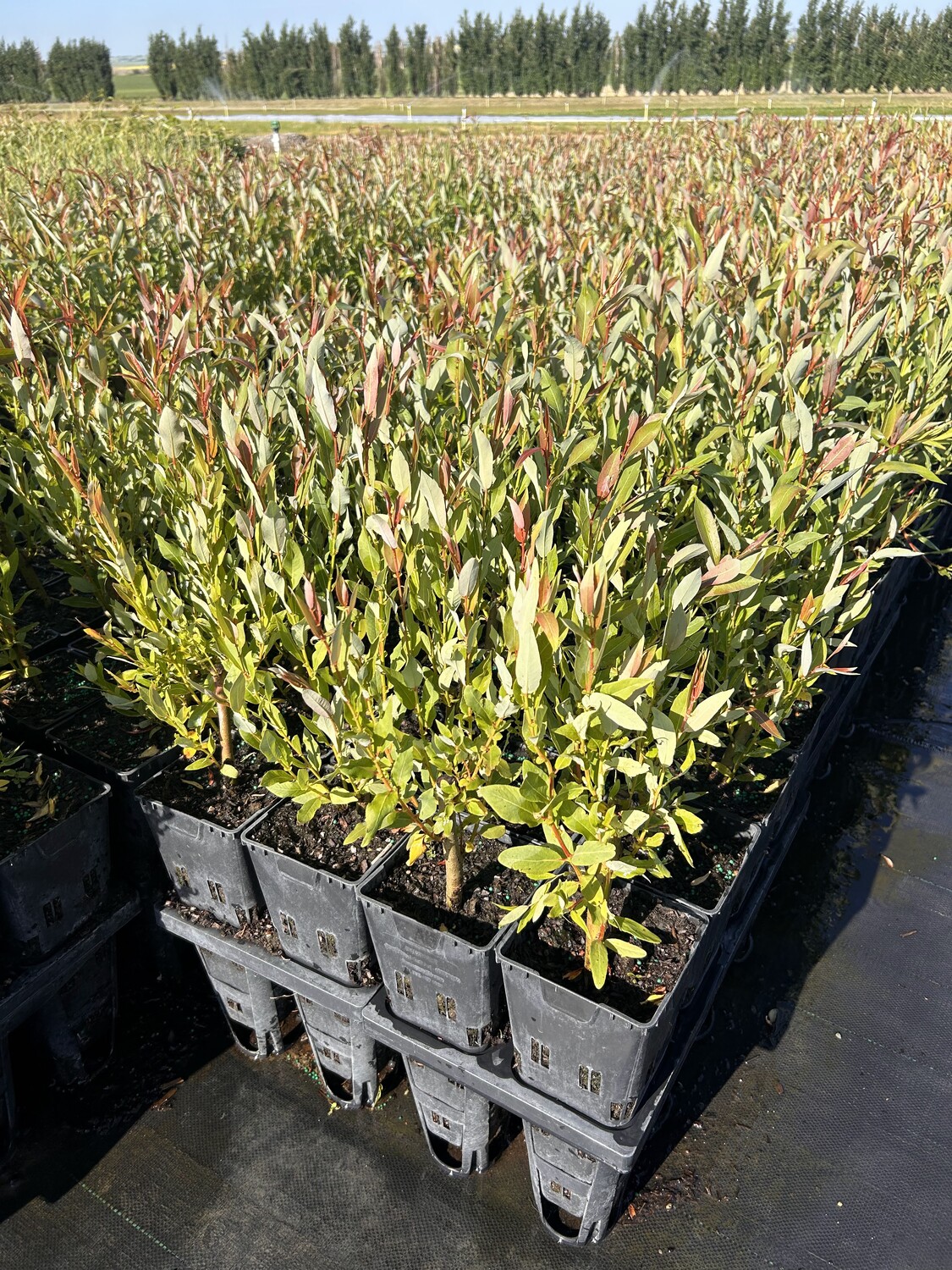
We also invest in high-quality pot systems because they can be reused many times, helping us minimize plastic waste while maintaining a consistent production standard. For us, that is part of responsible horticulture. Restoration values should not stop at the edge of the project site. They should also be reflected in how material is produced.
There is no universal willow format for every restoration project. The best choice depends on site hydrology, installation method, design intent, and the performance expectations.
Traditional live stakes are often the best fit where deep installation is possible, large planting areas require efficiency, and field flexibility is important. Rooted willow plants are often the stronger choice where higher establishment percentages, faster early growth, and immediate vegetation are priorities. Tall Rooted Stakes can be an ideal middle ground where the design allows full insertion and the project benefits from both rooted performance and a stake-like form.
The most successful projects are usually the ones where plant material format is considered early, not as an afterthought. When the format matches the realities of the site, establishment becomes more predictable and the restoration intent is better supported.
Restoration timelines do not always align neatly with production cycles. Some projects need immediate access to suitable material. Others benefit from advance planning and more tailored production.
EcoLogic Horticulture supports both. Through available inventory and mother bed resources, we can help meet immediate project needs where suitable material is already on hand. For projects with longer lead times or more specific eco-region requirements, we also offer contract collection and nursery growing production to align species, quantities, and formats with the work ahead.
That flexibility allows project teams to source willow material in a way that better reflects both ecological goals and construction realities.
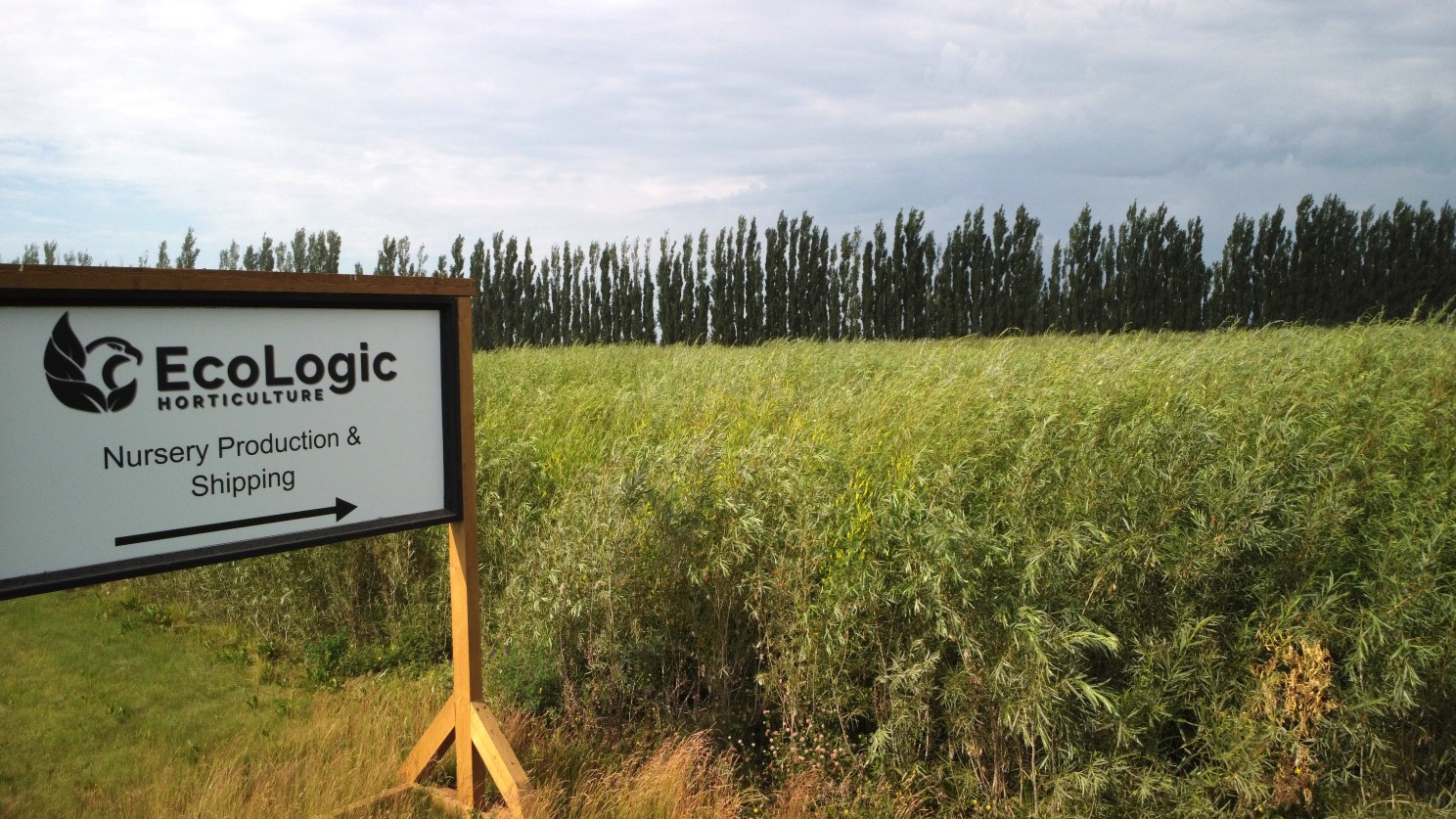
Willows and balsam poplar remain some of the most useful native plant materials available for riparian restoration and bioengineering. Their natural adaptability, ease of propagation, and functional role in living systems make them an essential part of many restoration designs.
But good results depend on more than simply having willow material available. They depend on using the right format for the job.
That may mean traditional live stakes for deep, efficient planting. It may mean rooted willow plants grown for stronger establishment and immediate vegetation. It may mean Tall Rooted Stakes where a project benefits from both a longer planting form and a developed root system.
At EcoLogic Horticulture, our goal is to help restoration professionals access the right willow material in the right format for the realities of their project, whether that means available inventory for rapid deployment or contract production for more tailored needs.


