Seed Shop | By EcoLogic Horticulture

Willow Stakes
Locally sourced live willow stakes for riparian restoration and bank stabilization
Download Product Spec Sheet >

In healthy riparian ecosystems, streams and riverbanks are stabilized by dense stands of woody vegetation. Where this vegetation is missing, erosion, habitat loss, and reduced resilience to fluctuating water levels can occur.

Willow (Salix) species form the backbone of riparian restoration efforts due to their ability to root from cuttings and rapidly establish along waterways.

EcoLogic grows and manages extensive willow motherbeds at its Strathmore, Alberta nursery, sourcing material from the Bow, Red Deer, and Oldman River watersheds to ensure regionally appropriate genetics.
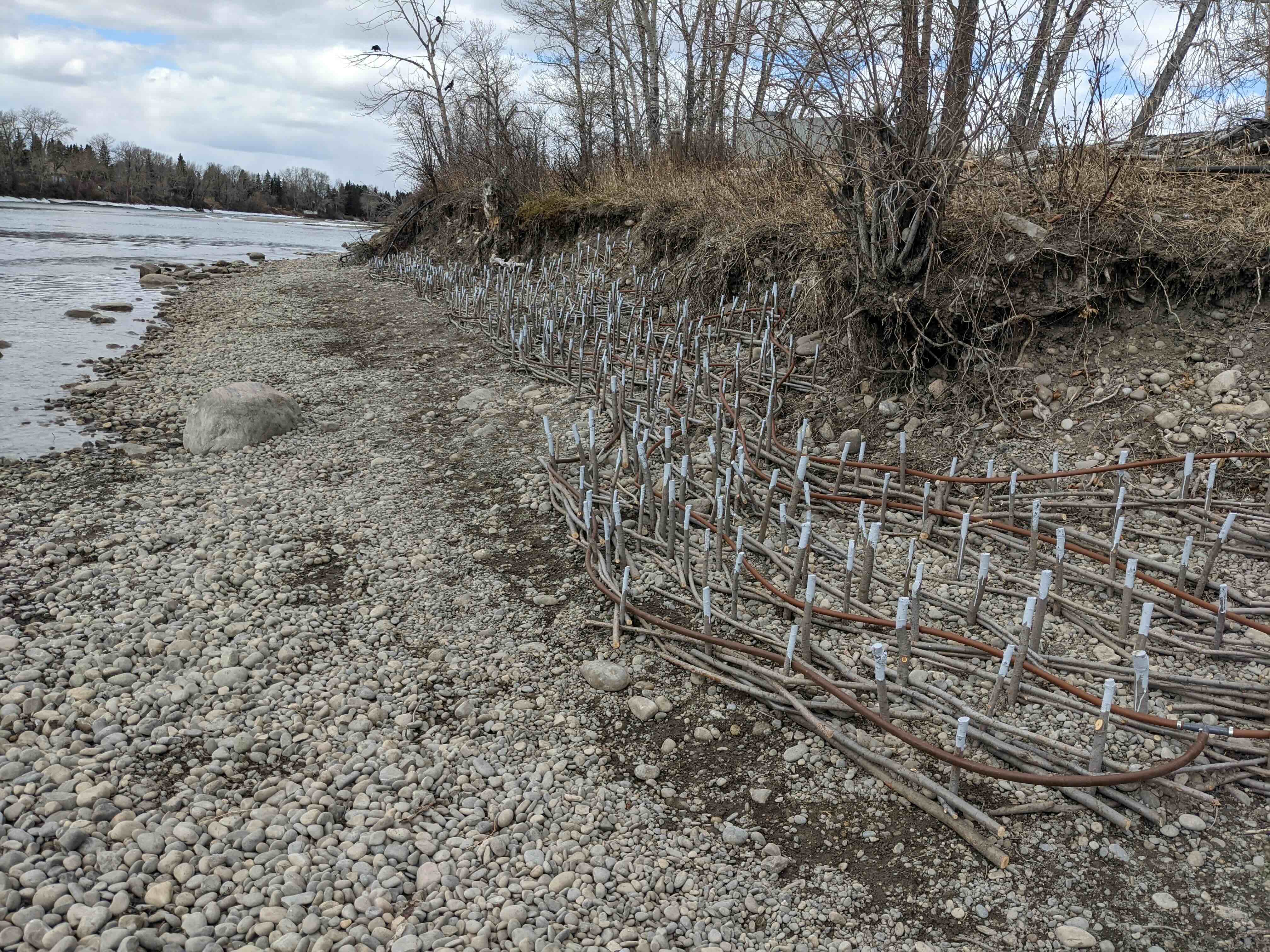
When Willow Stakes
Are the Right Choice

Willow stakes are commonly specified when:

  • A project requires bank stabilization and erosion control
  • Restoration efforts focus on riparian or wetland environments
  • Projects need cost-effective, scalable woody vegetation establishment
  • Sites allow for dormant season installation (spring or fall)
  • A project requires locally adapted native woody species

Willow stakes are a foundational tool for restoring natural function to degraded waterways.

Naturally Engineered for
Riparian Establishment

  • Willow stakes are harvested as dormant cuttings from live willow populations and installed directly into the ground where they regenerate into full plants.
  • Because willows naturally root from stem cuttings, they can establish quickly in suitable conditions, particularly where moisture is available.
  • Their growth habit allows them to stabilize soil, reduce erosion, and create habitat as they mature, forming dense riparian vegetation over time.

Willow stakes are harvested directly from locally adapted motherbeds and installed as dormant live cuttings, allowing entire woody plants to regenerate from a single stake. Unlike container-grown material, stakes rely on natural rooting processes to establish directly within the site.

This allows for efficient installation across large areas while maintaining alignment with regional genetics and site conditions.

Once installed, stakes develop root systems in response to available moisture and soil conditions, forming dense stands of vegetation that stabilize banks and restore ecological function. The result is a scalable, cost-effective solution for rebuilding resilient riparian systems.

Common
applications
include:

  • Riverbanks and streambank stabilization
  • Riparian and wetland restoration
  • Floodplain and shoreline projects
  • Erosion control in naturalized landscapes
  • Bioengineering and low-impact restoration techniques

Shipping

  • Willow stakes are shipped in bundled formats (20–50 per bundle) for efficient handling and transport.
  • As live plant material, stakes must be kept cool and moist during transport and staging to maintain viability.
  • Material should be stored out of direct sunlight and protected from drying prior to installation.
  • Bundles allow for scalable shipping across both small and large restoration projects.
  • Shipping is aligned with harvest timing and installation windows to ensure optimal performance.

Installation

  • Keep stakes cool and moist prior to planting, either by soaking or regular spraying
  • For best results, soak stakes for 48 hours up to 2 weeks before installation
  • Stakes harvested in fall can be overwintered in snow for spring planting
  • Install stakes with the top exposed and at least 80% of the length below ground
  • Plant deep enough to access groundwater if irrigation is not available

Maintenance

  • Establishment success improves with adequate moisture or irrigation
  • Deep planting improves success on non-irrigated sites
  • Early growth may vary, some stakes focus on root development before visible top growth
  • A light pull test in fall can help confirm root establishment
  • Replace stakes that show no growth after 2–3 seasons

Real World Conditions

The following videos demonstrate how we process, grow or colllect willow stakes in real-world conditions.
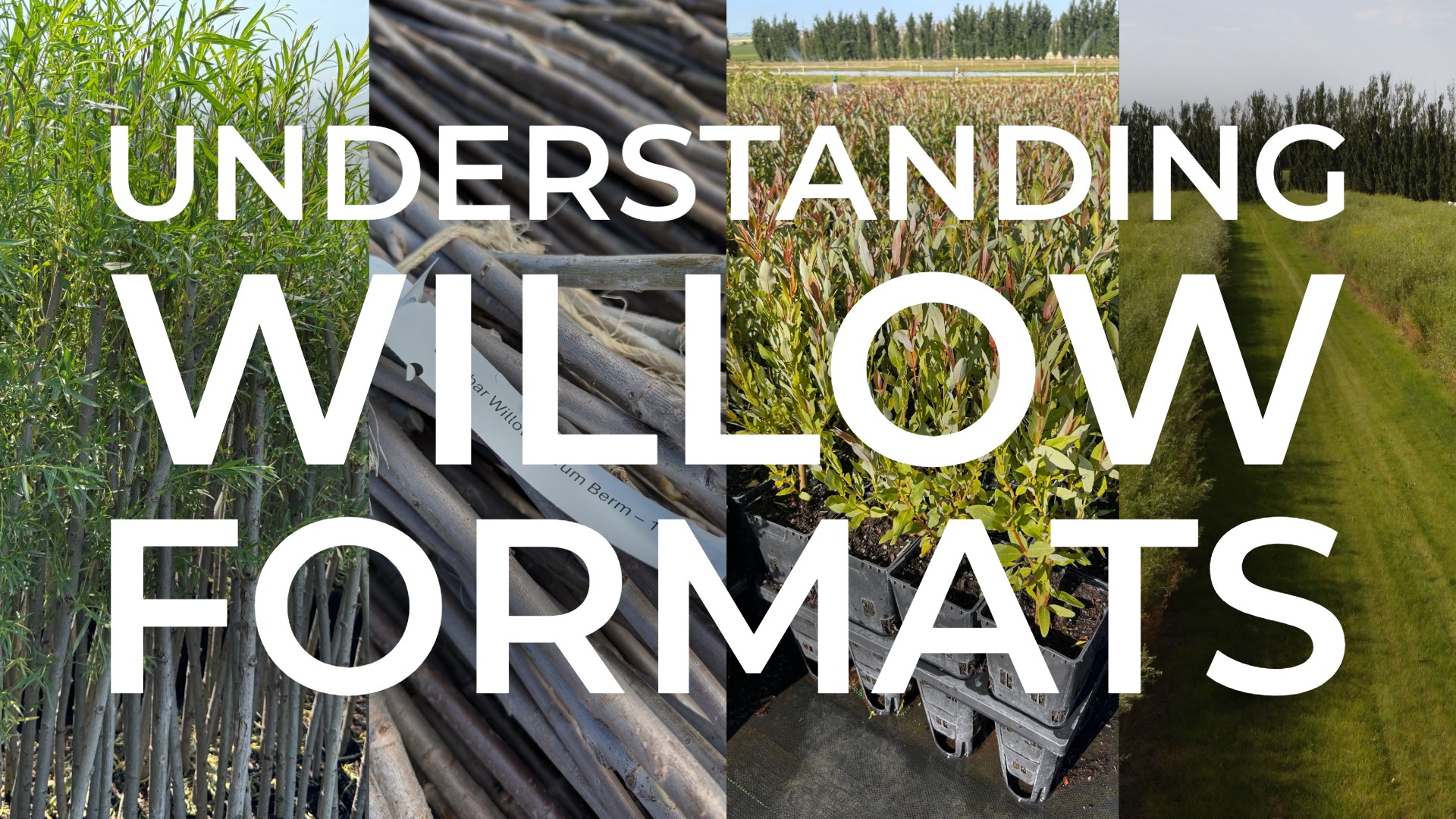
Formats, Availability & Procurement

EcoLogic works with
designers, contractors,
and municipalities to
align production with
project timelines.

  • Live stakes are harvested during spring or fall dormancy, when plants are best suited for cutting and installation.
  • Material can be sourced directly from EcoLogic’s motherbeds or through wild collection when required by project specifications.
  • Stakes can be harvested in various lengths and diameters depending on project requirements.
  • Stakes are packaged in bundles of 20–50, depending on size.
  • Orders should be confirmed early to secure motherbed inventory and ensure availability.

Learn more about Willow Stakes

Helping You Choosing the Right Willow Material for the Job

We care deeply about how willow material is grown because we know what it is being asked to do after it leaves our nursery. Whether it is a live stake, a rooted willow, or a Tall Rooted Stake, each format is produced with the goal of supporting stronger establishment and better restoration outcomes. Give this article a read to become better aquatinted with a few of the most popular formats.

Read More >

Tall Rooted Stakes (TRS) Provide Plant Format Innovation for the Restoration Industry

Human development and natural disasters have led to degradation and erosion of habitat leaving many riparian areas in need of restoration. With evolved understanding of our local ecology an innovation is starting to take center stage. Say hello to the Tall Rooted Stake or TRS.

Read More >

Downloads & Technical Resources

Download Product Spec Sheet (PDF) >
Download Product CATALOG >
Find out how we can help you get natural.
We have the perfect product for your naturalization or sustainable landscaping project.
Contact US