Seed Shop | By EcoLogic Horticulture

Tall Rooted Stakes (TRS)
Pre-rooted, stake-form willow material for high-performance riparian restoration
Download Product Spec Sheet >

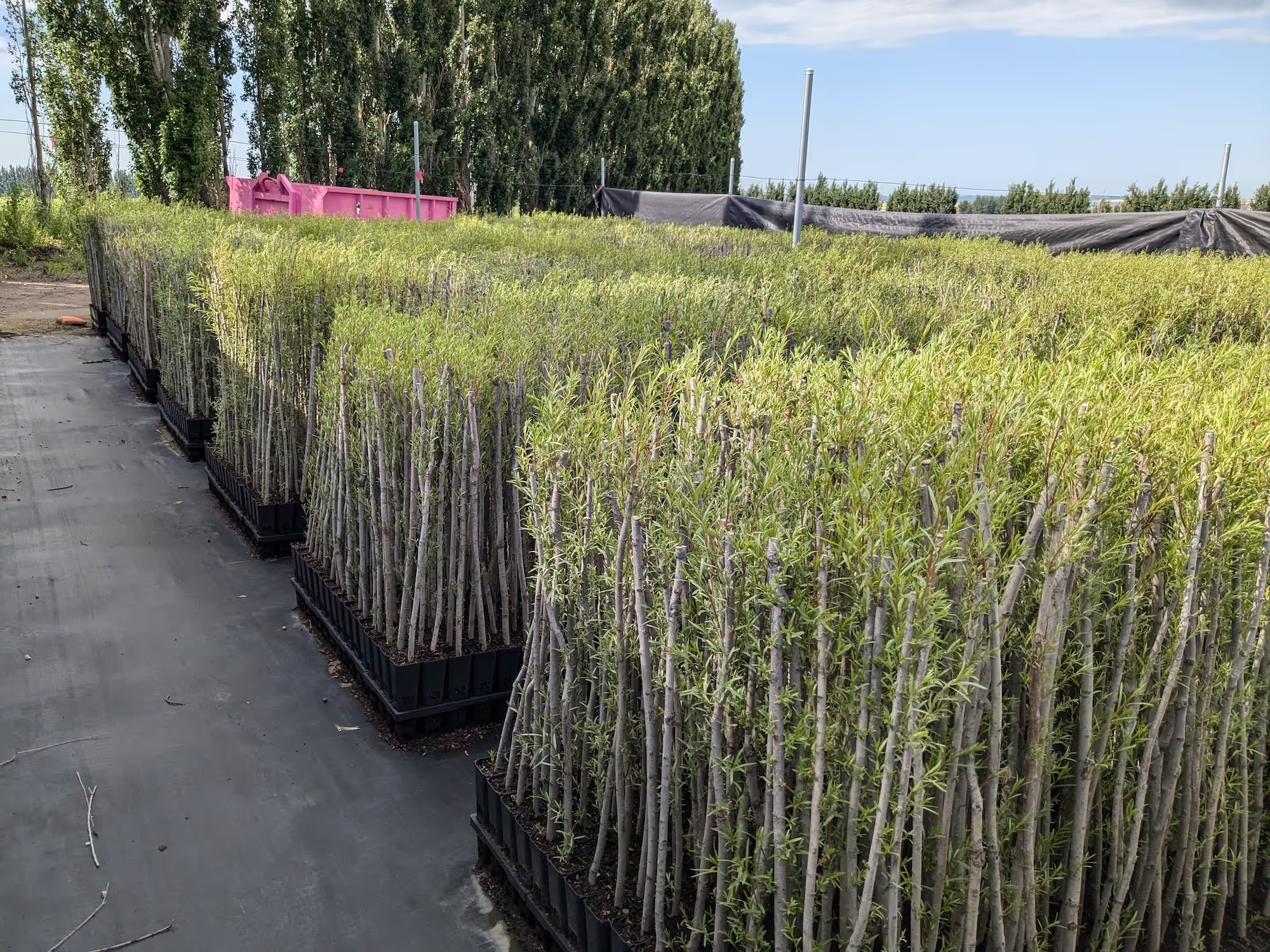
Tall Rooted Stakes (TRS) are increasingly being specified on riparian restoration projects as a hybrid planting format that blends the advantages of live stakes and rooted plant material.

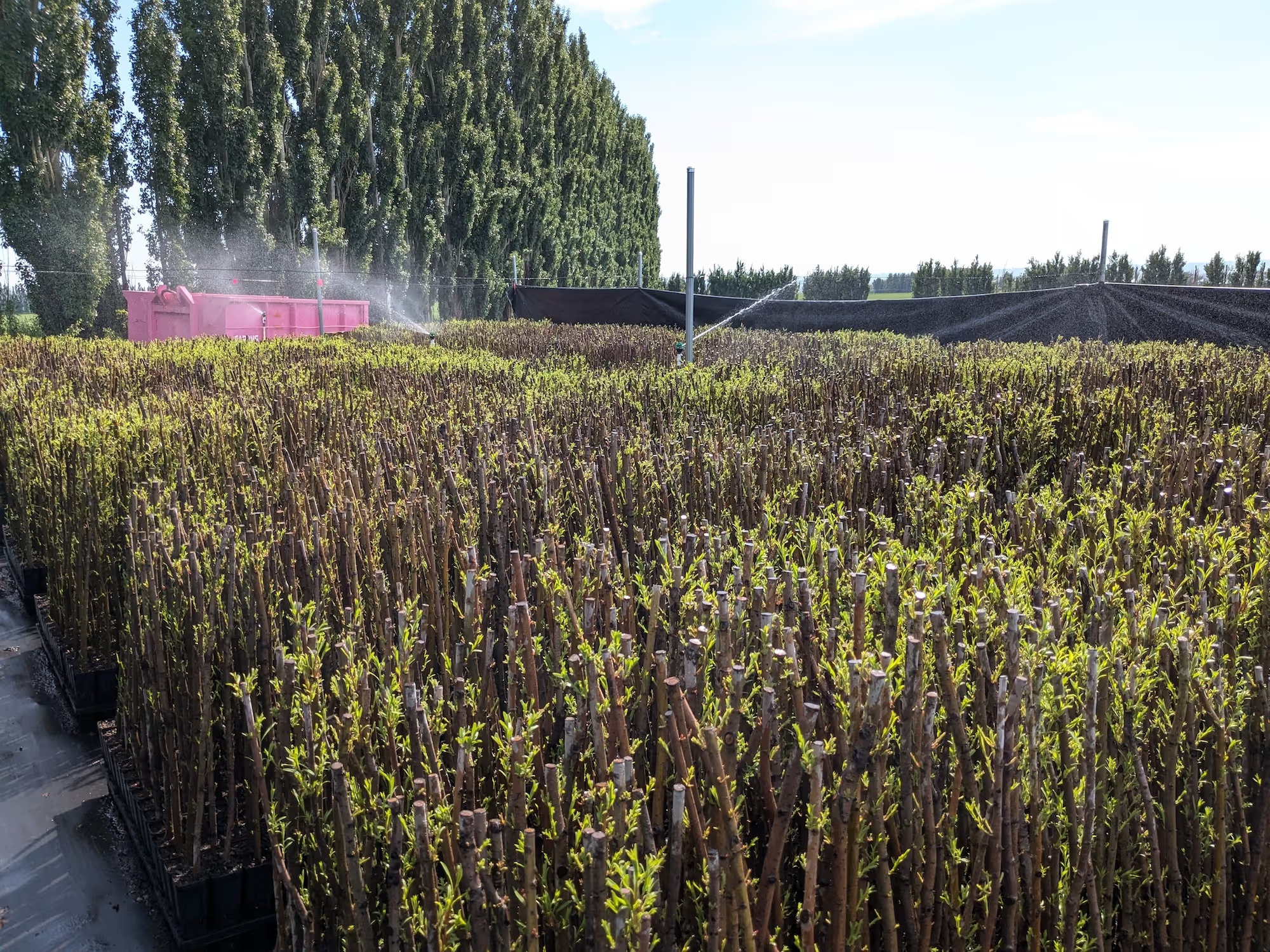
Each season, TRS are produced from spring-harvested live stakes and grown in nursery conditions using air-pruning containers, resulting in strong, well-developed root systems prior to installation.

Unlike traditional live stakes, which must be installed during narrow dormant-season windows, TRS can be planted throughout the growing season once vegetated, significantly expanding project flexibility and reducing scheduling constraints.
When Tall Rooted Stakes Willows
Are the Right Choice

TRS are specified when:

  • Projects require higher success rates than live staking alone
  • Designs benefit from deep, stake-style installation
  • Installation timelines extend beyond spring and fall windows
  • Sites are high-risk or environmentally challenging
  • Restoration plans require both immediate vegetation and long-term stability

TRS are ideal when both performance and flexibility are critical.
Grown for Hybrid
Performance

  • Tall Rooted Stakes are produced by combining live stake harvesting with nursery-based root development, creating a planting format that delivers both structural and biological advantages.
  • Grown in air-pruning and root-training containers, TRS develop strong, fibrous root systems without root wrap, preparing them for successful establishment after planting.
  • This allows TRS to maintain the long, stake-like form used in bioengineering designs, while also benefiting from a pre-established root system.

Tall Rooted Stakes combine the deep installation and structural function of a traditional live stake with the establishment advantages of a rooted plant. Unlike dormant stakes, which must initiate rooting after installation, TRS are grown in nursery conditions to develop active root systems before planting.

This allows them to be handled, transported, and installed as a stable planting unit while significantly improving survival rates and reducing establishment risk.

Once installed, TRS access deeper soil moisture through their stake-like form while expanding their existing root systems into surrounding soil. The result is immediate vegetation, faster stabilization, and a more reliable path to riparian restoration success.

Common
applications
include:

  • Streambank and riverbank stabilization
  • Bioengineering installations (brush layers, berms, slopes)
  • Riparian and wetland restoration
  • Post-disturbance recovery (flooding, erosion events)
  • Projects requiring extended planting windows

Shipping

  • TRS are shipped as custom-grown material, aligned with project timelines and installation windows.
  • Because TRS are produced and planted within the same season, shipping is tied closely to production and installation timing.
  • Root systems are developed prior to shipping, allowing plants to be transported and handled with improved stability compared to live stakes.
  • Container-grown systems are designed to prevent root wrap and maintain integrity during transport.
  • Delivery is coordinated to minimize staging time and ensure plants are installed within their optimal performance window.

Installation

  • TRS should be installed with a large portion of the stem below ground to access moisture and ensure stability
  • Designs often target approximately 80% of the stem below grade and 20% exposed
  • Suitable for bioengineering techniques such as brush layering and slope stabilization
  • Installation holes must accommodate both root mass and stake depth
  • Best results occur when installed in moist soils or areas with access to groundwater

Maintenance

  • TRS provide higher establishment success rates compared to traditional live stakes
  • Deep rooting improves drought resilience and long-term stability
  • Faster establishment supports earlier erosion control and habitat development
  • Reduced need for replanting compared to lower-success methods
  • Long-term systems develop into dense riparian vegetation communities

Real World Conditions

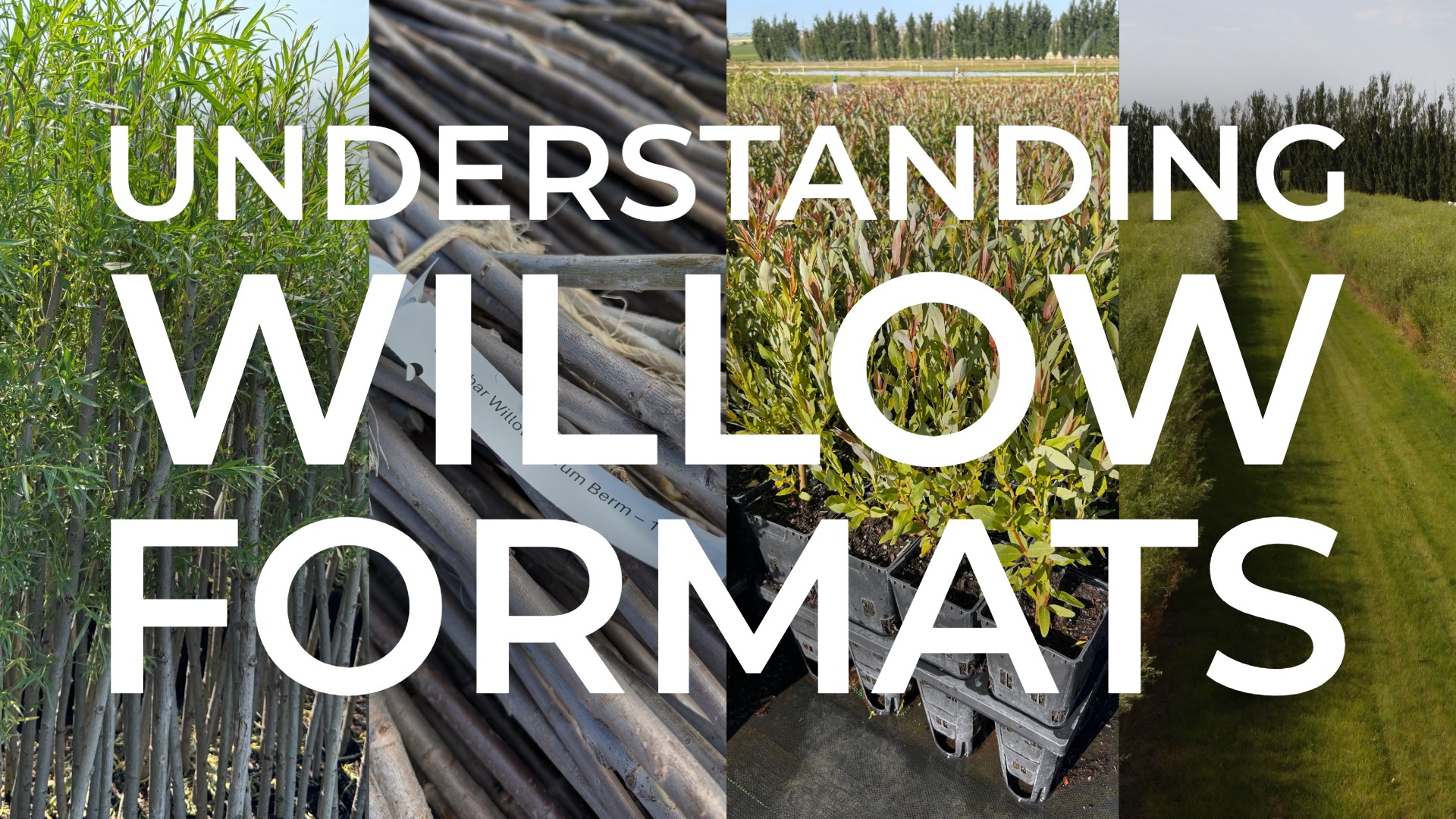
The following videos demonstrate how we process, grow or colllect willows in real-world conditions.
Formats, Availability & Procurement

EcoLogic works with
designers, contractors,
and municipalities to
align production with
project timelines.

  • TRS are custom grown for each project to align with species, quantities, and timelines.
  • Production begins with spring harvesting of live stakes, which are then propagated into rooted material.
  • Plants are grown in specialized containers to maximize root structure and performance prior to installation.
  • Orders should be confirmed by mid-March to allow for proper production scheduling and harvest timing.
  • Due to production timing, TRS are typically planted in the same season they are grown.

Learn more about Willows

Helping You Choosing the Right Willow Material for the Job

We care deeply about how willow material is grown because we know what it is being asked to do after it leaves our nursery. Whether it is a live stake, a rooted willow, or a Tall Rooted Stake, each format is produced with the goal of supporting stronger establishment and better restoration outcomes. Give this article a read to become better aquatinted with a few of the most popular formats.

Read More >

Tall Rooted Stakes (TRS) Provide Plant Format Innovation for the Restoration Industry

Human development and natural disasters have led to degradation and erosion of habitat leaving many riparian areas in need of restoration. With evolved understanding of our local ecology an innovation is starting to take center stage. Say hello to the Tall Rooted Stake or TRS.

Read More >

Downloads & Technical Resources

Download Product Spec Sheet (PDF) >
Download Product CATALOG >
Find out how we can help you get natural.
We have the perfect product for your naturalization or sustainable landscaping project.
Contact US